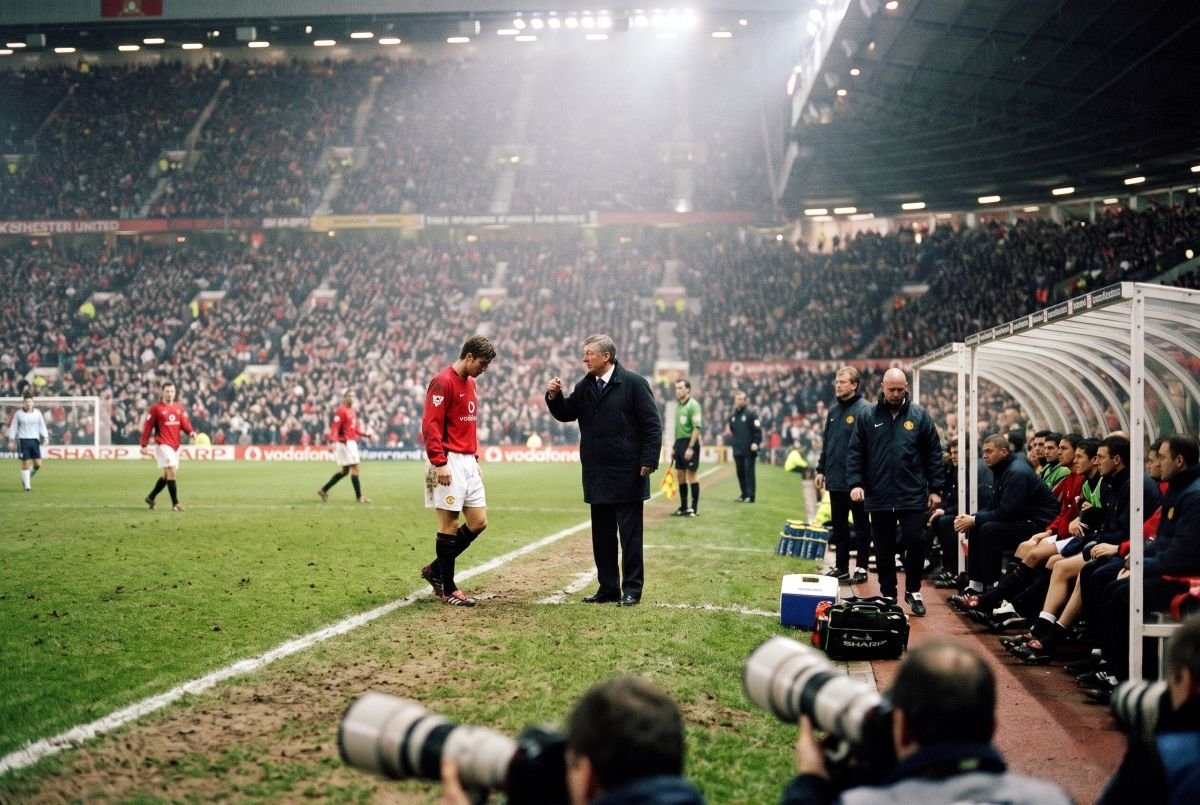
NO PLAYER WAS EVER BIGGER THAN THE CLUB: THE QUIET RULE THAT DEFINED SIR ALEX FERGUSON’S MANCHESTER UNITED
In modern football, managerial careers are often short. A few disappointing results, a dressing-room conflict, or disagreements with the board can bring an end to a manager’s time at a club. Yet Sir Alex Ferguson remained at Manchester United for approximately 26 and a half years, from November 1986 until May 2013.
His longevity was built on many qualities: tactical adaptability, an extraordinary ability to develop young players, a winning mentality, and an understanding of how to rebuild a team across different generations. But one principle stood above the rest:
No player was ever bigger than Manchester United.
Ferguson rarely needed to turn this belief into a public slogan. His decisions made it clear. Reputation, popularity, and individual talent could never guarantee a player permanent protection. If a relationship became impossible to repair, even the biggest names could leave.
Three famous departures illustrate this philosophy particularly well.
David Beckham: When Fame and Authority Collided
By 2003, David Beckham was much more than a footballer. He was an international celebrity, a global commercial figure, and one of the most recognizable athletes in the world.
His popularity brought enormous attention to Manchester United, but his relationship with Ferguson had become increasingly strained. The manager believed Beckham’s growing celebrity status was beginning to distract from football, while Beckham remained determined to establish his own identity and career.
The tension reached a memorable moment in February 2003, following United’s FA Cup defeat to Arsenal. During an angry dressing-room confrontation, Ferguson kicked a football boot that struck Beckham above the eye.
The incident became one of the most famous stories in English football. A few months later, Beckham joined Real Madrid.
The transfer demonstrated that even a player with Beckham’s worldwide reputation could not be considered untouchable. Ferguson was prepared to make difficult decisions when he believed the team’s authority and direction were at stake.
Roy Keane: Even the Captain Was Not Untouchable
Roy Keane was one of the defining figures of Ferguson’s Manchester United. As captain, he represented the team’s intensity, determination, and competitive spirit.
However, their relationship deteriorated in 2005. Keane publicly criticized several teammates in an interview recorded for MUTV, questioning their performances and standards.
The situation created serious tension within the club. Keane was not an ordinary squad member: he was the captain and one of the most influential personalities in the dressing room.
Nevertheless, his status did not prevent his departure. In November 2005, Manchester United and Keane agreed to terminate his contract.
It was a significant moment in Ferguson’s management career. The club had lost an influential leader, but the manager was unwilling to allow an increasingly difficult relationship to undermine the team’s environment.
United subsequently entered another successful period, winning three consecutive Premier League titles from 2006–07 to 2008–09.
Cristiano Ronaldo: Letting a Superstar Pursue His Dream
Cristiano Ronaldo’s departure in 2009 was different from the situations involving Beckham and Keane.
Ronaldo had developed into one of the world’s greatest footballers at Manchester United. He won the Ballon d’Or in 2008, helped the club win the Champions League that year, and became the central figure in an outstanding team.
However, his desire to join Real Madrid was well known. After years of speculation, the Spanish club completed his transfer in the summer of 2009.
The reported fee was approximately £80 million, equivalent to €94 million, making it a world-record transfer at the time.
Ferguson had previously resisted Ronaldo’s departure, but eventually allowed him to pursue the move. Rather than treating the transfer as the end of United’s success, the club continued to compete at the highest level.
Manchester United won the Premier League in 2010–11 and again in 2012–13, Ferguson’s final season as manager.
Ronaldo’s departure did not immediately destroy the team, although replacing a player of his quality was never a simple task. The important point was that United’s identity and ambitions continued beyond the presence of one superstar.
Ruud van Nistelrooy: Another Reminder That Reputation Was Not Enough
Ruud van Nistelrooy was one of Europe’s most prolific strikers during his time at Old Trafford. His goals helped United win major trophies, and he became a fan favorite.
However, his relationship with Ferguson deteriorated during the 2005–06 season. He eventually left Manchester United for Real Madrid in 2006.
His departure reinforced a broader pattern in Ferguson’s management: a player’s previous achievements did not automatically guarantee a place in the club’s future plans.
Yet it would be inaccurate to suggest that all four departures happened for precisely the same reason. Each involved its own circumstances, relationships, and footballing considerations.
What connected them was Ferguson’s willingness to make difficult decisions rather than allow any individual to become more important than the collective direction of the club.
Ferguson’s Legacy in Numbers
| Category | Record | Detail |
|---|---|---|
| Time at Manchester United | Approximately 26.5 years | November 1986 – May 2013 |
| Premier League titles | 13 | The most won by a manager |
| European Cup/Champions League titles | 2 | 1999 and 2008 |
| Total trophies | 38 | Manchester United’s official managerial tally |
| Famous departures | 4 players | Beckham, Keane, Van Nistelrooy, Ronaldo |
Source: Historical records compiled from Manchester United’s official history, PremierLeague.com and UEFA.com.
The Real Meaning Behind Ferguson’s Rule
Ferguson’s philosophy was not simply about selling famous players whenever disagreements occurred. Managing a successful dressing room required more than authority. It demanded clear expectations, strong relationships, difficult conversations, and the ability to recognize when a partnership had reached its end.
His greatest achievement was arguably his ability to maintain a competitive team across different generations. From the emerging talents of the early 1990s to the experienced stars of the 2000s, he repeatedly found ways to rebuild without abandoning the standards he expected.
That did not mean every decision was perfect. Some departures were controversial, and Manchester United experienced difficult seasons under his leadership. But his record demonstrated an extraordinary ability to keep the club competing for major honors over an unusually long period.
My Perspective
When I read about Ferguson, I do not see only a great football manager; I see a lesson about leadership and responsibility. A team cannot remain strong if one individual is allowed to become more important than the collective, no matter how talented that person may be. For me, Ferguson’s greatest strength was his willingness to make difficult decisions to protect the standards and identity of Manchester United.
Do you believe Ferguson’s principle that no player should ever be bigger than the club is still essential in modern football?