WHY DID FOOTBALL PLAYERS TAKE THE KNEE BEFORE MATCHES? THE POWERFUL MESSAGE AGAINST RACISM THAT CHANGED FOOTBALL
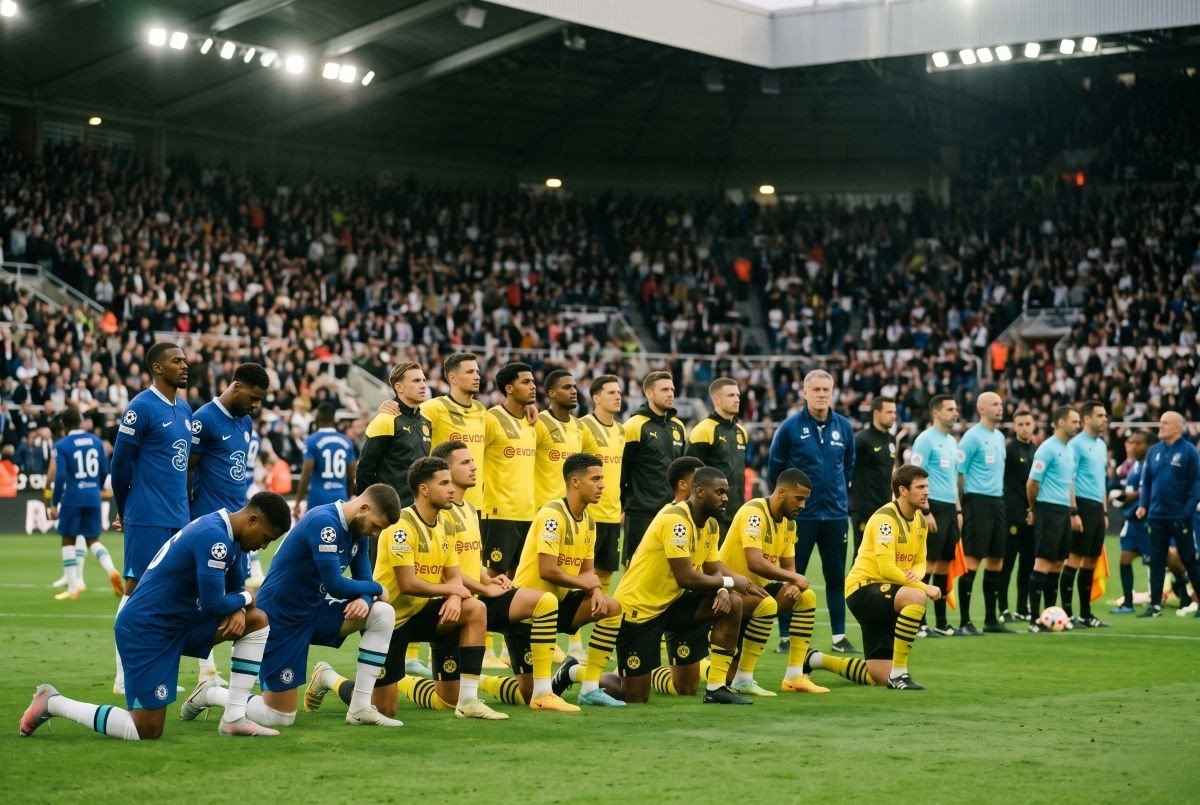
If you watched football between 2020 and 2023, you probably remember a moment that became familiar before many matches. Players from both teams would gather on the pitch, take a knee, and remain in that position for a few seconds before the referee started the game.
They were not praying, resting, or following a new football tradition. They were participating in something known as Taking the Knee, a symbolic gesture against racism and discrimination.
For some supporters, it was a powerful expression of solidarity. For others, it raised questions about politics, sport, and whether a simple gesture could genuinely change society.
But where did this movement begin? Why did footballers adopt it, and why did some clubs eventually stop doing it before every match?
Where Did Taking the Knee Come From?
Although the gesture became widely recognized in football in 2020, its modern origins can be traced to American sports four years earlier.
In 2016, Colin Kaepernick, an American football quarterback playing for the San Francisco 49ers, began protesting during the United States national anthem before games.
Initially, Kaepernick sat during the anthem to protest racial injustice and police violence against Black Americans. After discussions with former military player Nate Boyer, he began kneeling instead.
His decision attracted enormous attention. Some people supported his right to protest, while others criticized the gesture and disagreed with his decision to protest during the national anthem.
Nevertheless, the message was clear: Kaepernick wanted to draw attention to racial inequality and the treatment of Black people in American society.
The movement gained international attention in May 2020 following the death of George Floyd in Minneapolis. His death during an encounter with police officers triggered widespread protests against racism and police brutality across the United States and many other countries.
Football was not separate from these discussions.
Players, clubs, managers, and supporters began speaking more openly about discrimination in sport. In England, the Premier League became one of the most visible platforms for the movement.
When the competition resumed in June 2020 after its COVID-19 suspension, players took the knee before matches as a collective expression of support for racial equality.
For many footballers, it was a way to demonstrate that racism had no place in the sport or society.
What Does Taking the Knee Mean in Football?
Taking the knee became a recognizable symbol, but its meaning extended beyond the physical gesture itself.
There were three important messages behind the action.
First, it represented equality and respect.
Football brings together players from different countries, cultures, ethnic backgrounds, and communities. Taking the knee was intended to remind supporters that every player deserves equal treatment, regardless of their background.
A footballer’s ability should be judged by performance, dedication, and professionalism rather than skin colour or ethnicity.
Second, it represented opposition to racist abuse.
Racism has affected football for generations. Players have experienced discriminatory chants, insults from spectators, and abuse through social media.
Taking the knee was a public declaration that these behaviours should not be accepted as part of the game.
It also encouraged clubs, governing bodies, and supporters to recognize that fighting discrimination requires more than simply punishing individual incidents. Education, reporting systems, and consistent action are also necessary.
Third, it encouraged younger generations to think about equality.
Professional footballers are role models for millions of children. Their actions can influence how young supporters understand respect, teamwork, and fairness.
When children see their favourite players standing together against discrimination, they are exposed to an important message: people should not be treated differently because of their background.
The gesture itself cannot teach everything about racism, but it can create an opportunity for conversations that might otherwise never happen.
Why Did Some Football Teams Stop Taking the Knee Before Every Match?
As the movement continued, an important discussion emerged within English football.
Some players and supporters believed that taking the knee before every match was becoming routine. They worried that the gesture could gradually lose its meaning if it was repeated without additional action.
Others argued that the movement should continue because racism remained a serious problem.
The Premier League eventually changed its approach.
During the 2022–23 season, players continued taking the knee at selected moments rather than making it a regular feature before every match. These occasions included dedicated anti-discrimination campaigns and important points in the football calendar.
This change did not mean that the Premier League had abandoned its opposition to racism. Instead, it reflected an effort to combine symbolic gestures with other initiatives, including education, awareness campaigns, and action against discriminatory behaviour.
It is important to understand that not every team or competition followed exactly the same approach. Different clubs, leagues, and international tournaments have adopted different ways of expressing solidarity.
The debate also revealed an important question: Is a symbolic gesture enough, or must football do more to create lasting change?
For many people, the answer is that both are necessary.
Taking the knee can communicate solidarity, but meaningful progress also requires strong disciplinary action, better education, support for victims, and accountability from football organizations.
Taking the Knee in Football: Important Historical Milestones
| Period | Event | Significance |
|---|---|---|
|
2016 |
Colin Kaepernick begins kneeling during the US national anthem | Modern origins of the widely recognized protest |
| May 2020 | George Floyd’s death sparks international protests | Global attention on racial injustice |
| June 2020 | Premier League players take the knee when football resumes | The gesture becomes highly visible in English football |
| 2020–2022 | Clubs and players continue anti-racism demonstrations | Solidarity remains part of football’s public message |
| 2022–2023 | Premier League adopts selected moments for taking the knee | The gesture becomes more focused on designated occasions |
Source: Historical information compiled from Premier League announcements, NFL historical records, and public reports concerning the anti-racism movement.
Although taking the knee did not eliminate racism, it helped bring conversations about discrimination into stadiums, television broadcasts, and football communities around the world.
Its importance cannot be measured simply by the number of players who participated. The movement also encouraged people to think about how discrimination affects the lives of others.
Has Taking the Knee Changed Football?
This is a difficult question because social change rarely happens through one action.
Taking the knee did not prevent every racist incident, and football continues to face problems involving discriminatory abuse. Players still report offensive behaviour, while clubs and governing bodies continue to face pressure to respond more effectively.
However, the movement helped make opposition to racism more visible.
It showed that footballers could use their positions to communicate messages beyond the boundaries of sport. It also encouraged supporters to discuss subjects that were sometimes ignored or treated as separate from football.
Perhaps its greatest contribution was reminding people that football is part of society. The same problems that exist outside stadiums can also appear inside them.
A successful anti-racism campaign therefore requires more than a few seconds before kick-off. It requires consistent action from clubs, governing bodies, players, supporters, and communities.
Taking the knee was a symbol, but the real objective was a football environment where nobody has to experience discrimination.
My Perspective
When I first watched footballers taking the knee, I honestly did not understand what they were doing or why they had chosen that particular gesture. After learning about its history and the message behind it, I began to see it as a meaningful expression of solidarity with people who have experienced unfair treatment. Coming from a small town in Vietnam, I believe everyone deserves to be respected regardless of where they come from, how they look, or what makes them different.
For me, the most important lesson is that football should bring people together rather than create reasons to divide them.
I hope future generations will grow up in a world where players no longer need to make symbolic protests simply to demand equal treatment.
What do you think about Taking the Knee? Do you believe it was an effective way for footballers to raise awareness about racism, or should the sport focus more on education and direct action? I would be interested to hear your opinion, because football is at its best when everyone can enjoy the game without fear of discrimination.