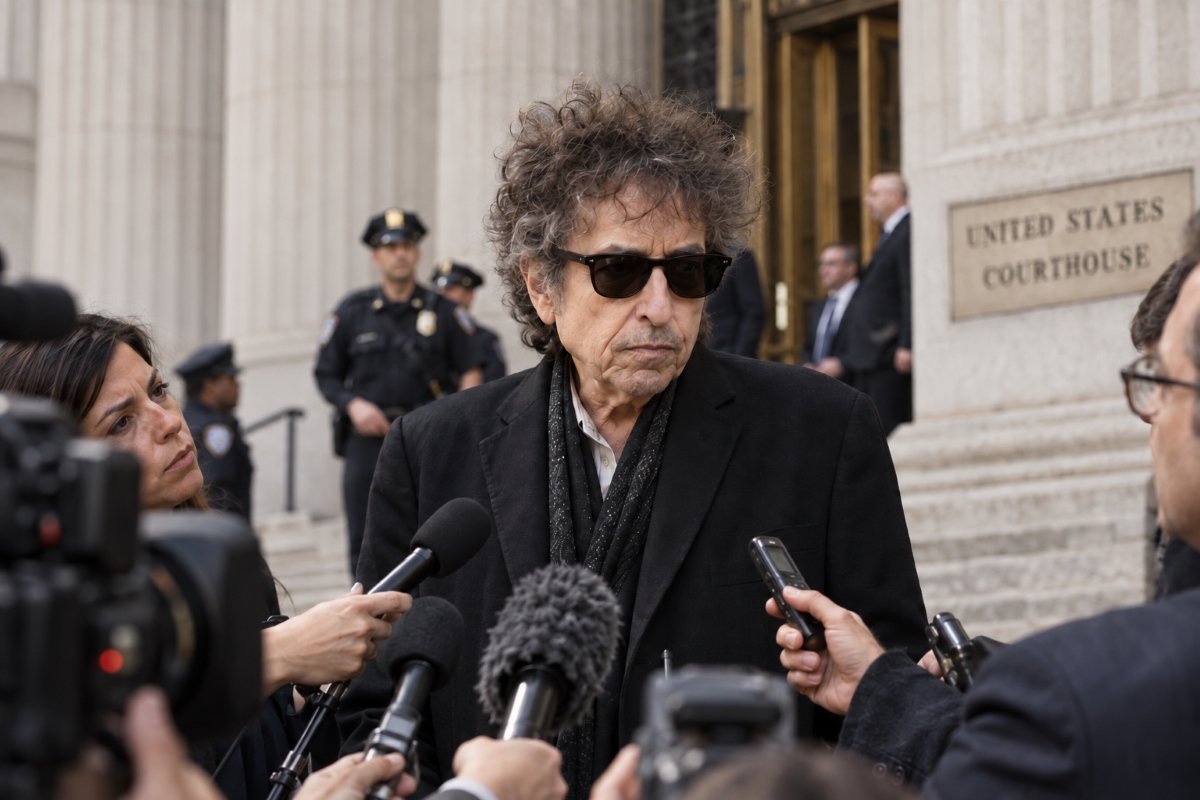
BOB DYLAN’S COURTROOM REVERSAL: HOW THE J.C. LAWSUIT ENDED—AND WHY THE LEGAL FALLOUT CONTINUED
When a plaintiff identified as J.C. filed a lawsuit against Bob Dylan in August 2021, the allegations drew attention far beyond the courtroom. A musician whose songs had accompanied generations of listeners suddenly faced claims concerning events said to have occurred nearly six decades earlier.
Dylan denied the allegations. Less than a year later, J.C. withdrew the case, and the court dismissed it with prejudice. The dispute then took another turn: the plaintiff’s attorneys faced financial sanctions over their handling of the discovery process.
The resulting story involves contested dates, missing documents, repeated judicial warnings, and a distinction that matters throughout: allegations, arguments by lawyers, and findings by a court are different things.
The proceedings began on August 13, 2021, when J.C. filed her complaint in New York State Supreme Court. The filing came near the end of the temporary window established under New York’s Child Victims Act, which allowed certain previously time-barred claims concerning childhood harm to proceed.
J.C.’s original account concerned an alleged six-week period in April and May 1965, involving encounters at Manhattan’s Chelsea Hotel. She sought compensation for lasting emotional and psychological harm. Dylan’s representatives rejected the account and made clear that he intended to contest the case.
For anyone encountering the story through a headline, the seriousness of the allegations was immediately apparent. Their seriousness, however, made careful examination of the evidence essential.
The chronology became an early point of contention. Dylan’s documented travel and performance schedule prompted questions about whether the original account could fit his movements. His activities during that period were unusually well documented for events so far in the past, making dates an important part of the public discussion.
An amended complaint filed on December 27, 2021, changed the alleged period to the broader spring of 1965. That amendment was a documented development in the proceedings. It did not, by itself, establish why the wording changed or resolve the underlying dispute. The district court later noted the public skepticism about the timeline without making it part of its sanctions analysis.
Once the case moved to federal court, the central procedural conflict concerned discovery: the exchange of relevant information that allows both sides to examine a claim.
Discovery can sound like a technical stage of litigation, but its purpose is practical. Lawyers need access to relevant records before questioning witnesses and preparing their arguments. Emails, messages, and other documents may support an account, contradict it, or reveal questions requiring further investigation. Their significance cannot be assessed properly when they have not been produced.
During 2022, disputes developed over the plaintiff’s responses and document production. Deadlines passed, further assurances were given, and the court issued warnings. Dylan’s attorneys also raised concerns about the alleged deletion of communications. Those concerns must be understood as defense allegations, rather than automatically treated as separate judicial findings.
The court’s later criticism went beyond frustration with scheduling. As summarized in EDRM’s analysis, the judge reviewed material that undermined the plaintiff’s account and described substantial failures in the discovery process. The record presented serious difficulties for the case, while also creating expense and obstacles for Dylan’s defense.
The decisive moment arrived on July 28, 2022. After a consultation during a court conference, J.C.’s attorney informed the judge that the plaintiff wished to withdraw her complaint with prejudice. The court dismissed the case on that basis.
Those two words carried a lasting consequence: the same claims could not simply be filed again. Dylan no longer faced that lawsuit.
The outcome should nevertheless be described accurately. There was no completed trial establishing liability against Dylan, and the dismissal was not a criminal acquittal. It was the permanent termination of a civil case at the plaintiff’s request.
For Dylan’s legal team, the proceedings still contained an unfinished issue: accountability for the discovery failures. The defense sought sanctions against the plaintiff’s attorneys, rather than against J.C. personally. This was a motion within the existing litigation, not a separate lawsuit proving that the original claims had been deliberately fabricated.
On September 28, 2023, Judge Katherine Polk Failla ordered attorney Daniel W. Isaacs to pay $5,000 and attorney Peter J. Gleason to pay $3,000, payable to Dylan. The penalties addressed failures to comply with discovery obligations.
The distinction is important. Financial sanctions for procedural misconduct do not automatically establish every accusation made by the opposing lawyers. In this case, the court did not conclude on the available record that either attorney had acted in bad faith.
There was also a later development. On August 13, 2025, the U.S. Court of Appeals for the Second Circuit upheld the sanctions, concluding that the district court had acted within its discretion. The appellate ruling reinforced the consequences of disregarding discovery obligations despite repeated warnings.
For readers looking back at the controversy, its ending deserves as much attention as its beginning. The initial allegations generated headlines, but the withdrawal, permanent dismissal, and subsequent sanctions are indispensable parts of the record.
The case also illustrates why a public reputation should never be judged solely by the first report of a complaint. Court proceedings develop through evidence, challenges, and decisions that can substantially change the picture.
The J.C. lawsuit ended in 2022. Its procedural consequences continued for years. Understanding both chapters reveals a more complete story than either the original accusations or a triumphant headline could convey.