EMOTIONAL REVELATION: PAUL MCCARTNEY’S DREAM OF HIS LATE MOTHER AND THE UNFORGETTABLE STORY BEHIND “LET IT BE”
Few songs in popular music have carried the comfort, tenderness, and quiet wisdom of The Beatles’ “Let It Be.” Released in 1970, the song became one of the group’s most enduring recordings and a source of reassurance for millions of listeners. Yet behind its familiar melody lies a deeply personal story involving Paul McCartney, his mother, and a dream that stayed with him long after he woke.
Paul McCartney was only fourteen years old when his mother, Mary McCartney, died in 1956 after a long illness. Her death was one of the most painful experiences of his youth. Mary had been a loving and important presence in the McCartney family, and losing her at such a young age left a lasting impression on Paul. Although he continued with his life and eventually became one of the most successful musicians in history, the memory of his mother never disappeared.
Years later, during a particularly difficult period in The Beatles’ history, that memory unexpectedly returned to him.
By the late 1960s, The Beatles were under enormous pressure. The group had achieved extraordinary success, but behind the scenes there were disagreements, exhaustion, and uncertainty about the future. Their relationships had become increasingly complicated, and the atmosphere surrounding the band was far removed from the excitement of their early years.
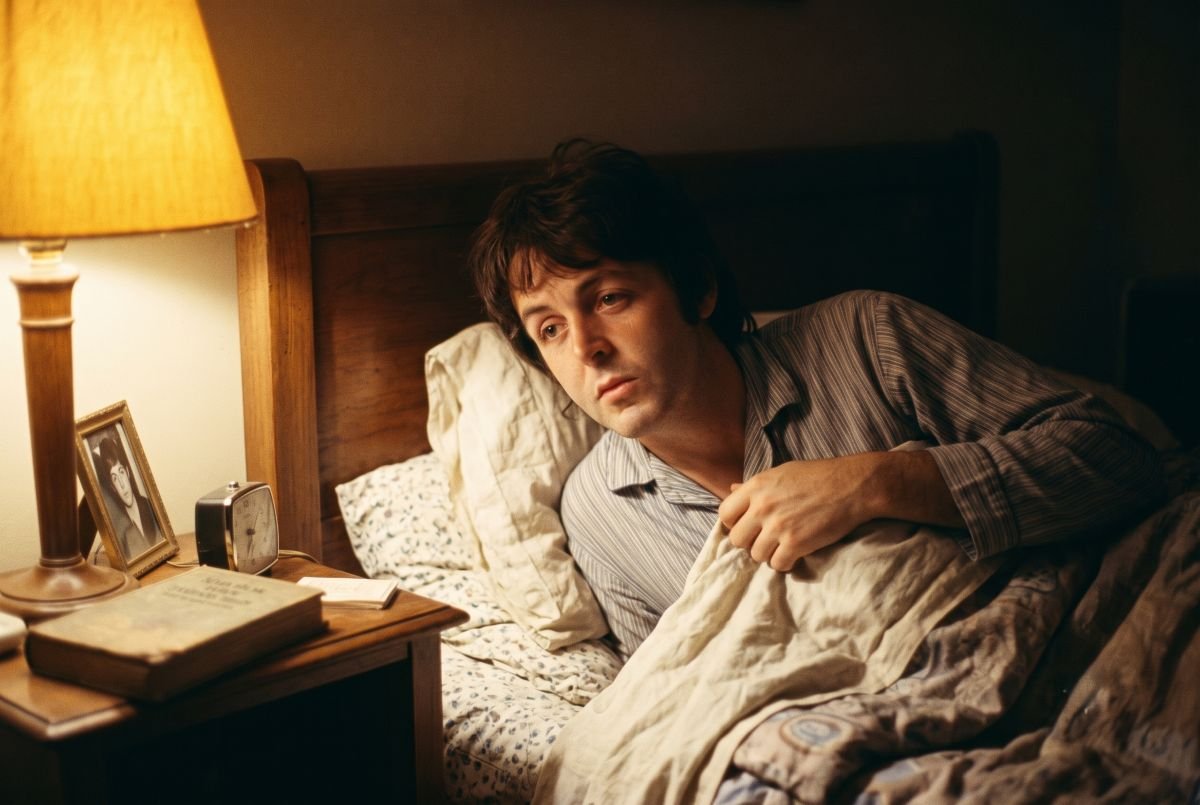
It was during this troubled period that McCartney had a remarkable dream.
He later explained that he dreamed of his mother, Mary, who had been gone for more than a decade. In the dream, she offered him words of reassurance. The central message was simple: “Let it be.”
For McCartney, the experience was deeply comforting. He woke with a feeling of peace, carrying the impression that his mother had somehow returned to remind him that difficult moments would eventually pass.
The phrase stayed in his mind.
McCartney began developing it into a song, turning a deeply personal memory into a piece of music that would eventually speak to people across generations. Rather than creating a complicated composition, he built the song around a simple piano melody, gentle vocals, and words that sounded almost like a quiet conversation with someone offering comfort.
The result was “Let It Be.”
The song was recorded during a turbulent period for The Beatles. Their final years together were marked by creative disagreements and personal tensions, making the peaceful character of the song particularly striking. While the group around him was experiencing uncertainty, McCartney was writing about acceptance, hope, and finding calm during difficult times.
The song’s simplicity became one of its greatest strengths.
The opening piano immediately establishes a reflective atmosphere. McCartney’s voice carries a sense of vulnerability, while the repeated phrase “Let it be” provides the song with its emotional center. As the recording develops, the arrangement grows stronger, eventually creating the feeling of a shared message rather than merely one man’s private experience.
“Let It Be” was released as a single in March 1970, shortly before The Beatles formally ended their career as a group. That timing gave the song an additional layer of meaning. For many listeners, it seemed almost like a farewell—not only to a particular moment in the band’s history, but to an entire era of popular music.
McCartney has repeatedly spoken about the personal meaning of the song. He has explained that the “Mother Mary” in the lyrics referred to his own mother, rather than being a religious reference, although listeners are naturally free to interpret the words in different ways.
That distinction is important because it reveals just how personal the song was. Behind a worldwide hit was a son remembering the woman who had been taken from him during his teenage years.
There is something profoundly moving about that connection. Mary McCartney could never have known what her son would eventually accomplish. She died before he became a global star, before The Beatles filled stadiums, before millions of people learned his name. Yet decades later, a memory of her became part of one of the most famous songs ever recorded.
Perhaps that is why “Let It Be” continues to resonate.
The song does not promise that life will always be easy. Instead, it suggests that when circumstances become overwhelming, there can still be value in patience, acceptance, and hope. Its message is deliberately uncomplicated, which may be exactly why it has remained so powerful.
For McCartney, however, the story will always be more intimate. Beneath the worldwide fame, awards, records, and countless performances is the memory of a young boy who lost his mother and carried that loss into adulthood.
A dream brought that memory back to him at a moment when he needed reassurance most. From that dream came a melody. From that melody came a song. And from that song came a message that would eventually reach millions of people around the world.
The story of “Let It Be” is therefore not simply the story of a Beatles classic. It is the story of memory transformed into music, grief transformed into comfort, and a son’s enduring connection to his mother expressed through one unforgettable song.
Sometimes, the most powerful music begins with something deeply personal. And sometimes, a few simple words can remain with us for an entire lifetime: let it be.