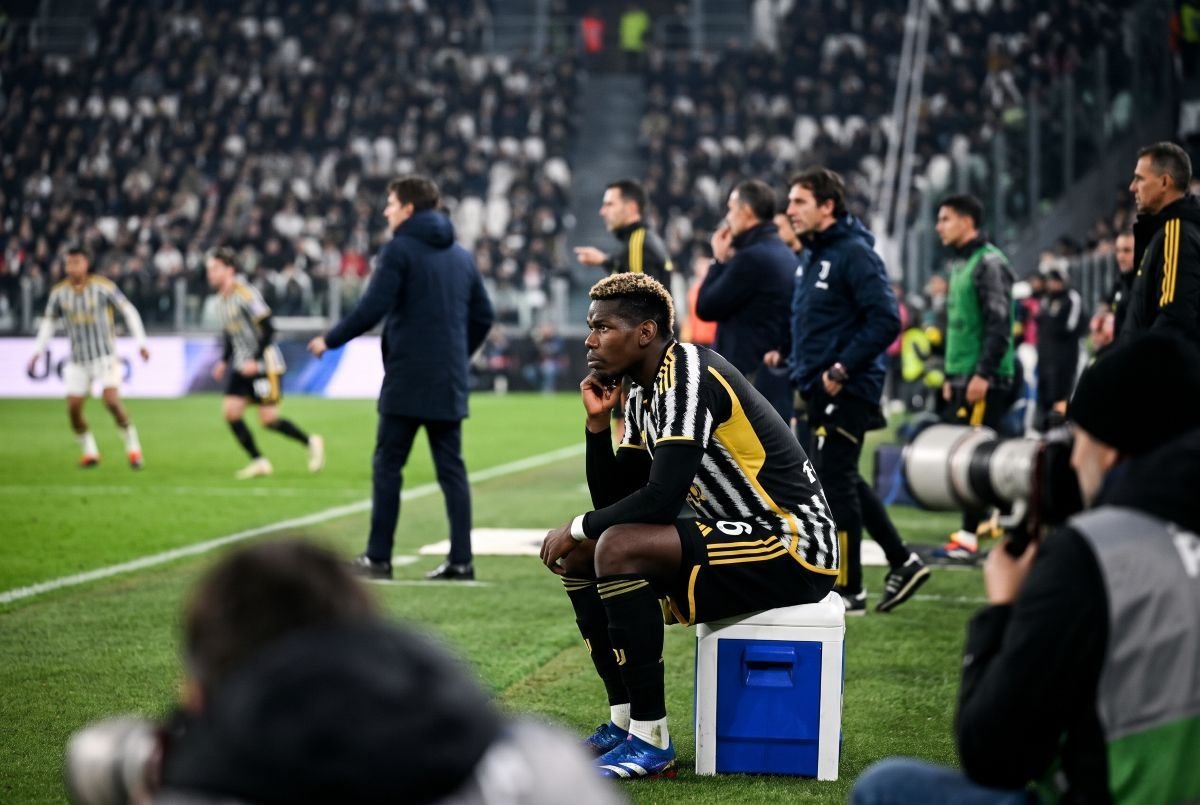
PAUL POGBA: THE EXTRAORDINARY TALENT THAT FACED THE HARDEST TEST OF HIS CAREER
In the summer of 2016, Paul Pogba became the most expensive footballer in the world at the time. Manchester United paid Juventus an initial transfer fee of 105 million euros, with additional payments potentially increasing the total cost, to bring the French midfielder back to Old Trafford.
Expectations were enormous. Pogba had already demonstrated his extraordinary abilities in Italy, and many supporters believed he could become one of the greatest midfielders of his generation. He possessed physical strength, technical ability, creativity, and the confidence to influence important matches.
His career initially appeared to justify that excitement. He won major trophies with Juventus, became a World Cup champion with France in 2018, and produced performances that demonstrated why so many people considered him a special footballer.
However, the years that followed were far more complicated. Repeated injuries interrupted his progress, his time at Manchester United became increasingly inconsistent, and a doping case resulted in a lengthy suspension that was later reduced on appeal.
Pogba’s story is not simply about wasted talent or a lack of discipline. It is a complicated example of how injuries, professional challenges, personal circumstances, and difficult decisions can affect even the most gifted athletes.
His career raises an important question: how much talent does a footballer need, and what does it take to protect that talent over time?
Talent Was Never the Question
Paul Pogba had many qualities that made him different from other midfielders. Standing approximately 1.91 metres tall, he combined physical strength with excellent ball control, impressive passing ability, and the confidence to carry the ball through midfield.
He could defend, create opportunities, shoot from distance, and contribute goals. Few midfielders possessed such a combination of physical and technical qualities.
His development at Juventus demonstrated his potential. After leaving Manchester United as a teenager in 2012, Pogba established himself as an important member of the Italian club’s midfield. He helped Juventus win four consecutive Serie A titles between 2013–14 and 2016–17, although he had already returned to Manchester United before the final campaign was completed.
His performances attracted attention across Europe. By the time Manchester United brought him back in 2016, he was regarded as one of the most exciting young midfielders in the game.
The biggest international moment of his career arrived at the 2018 FIFA World Cup in Russia.
Pogba played an important role in France’s successful campaign, combining physical presence with technical quality and tactical awareness. In the final against Croatia, he scored France’s third goal during their 4–2 victory.
It was a defining moment. Pogba had helped his country become world champions and demonstrated that he could perform on football’s biggest stage.
His talent was never in serious doubt. The challenge was finding the consistency, fitness, and stability needed to maintain that level.
Injuries Changed the Direction of His Career
After the 2018 World Cup, Pogba’s career became increasingly affected by physical problems.
During his later years at Manchester United, he experienced several injuries that prevented him from maintaining a consistent run of appearances. His ankle and muscular problems disrupted his preparation and limited his ability to contribute regularly.
Injuries are particularly difficult for midfielders who depend on movement, acceleration, balance, and physical strength. Even when a player returns to training, rebuilding match fitness and confidence can take time.
Pogba’s second spell at Manchester United therefore became a mixture of impressive performances and frustrating interruptions.
He occasionally demonstrated the quality that had made him a world-record signing, but he struggled to maintain that level across an entire season.
His return to Juventus in 2022 was expected to provide a fresh beginning. However, the move did not develop as planned. Further injuries restricted his involvement, and he made only a limited number of appearances during his second spell in Turin.
It is important to distinguish between injuries and personal discipline. A player cannot always control when an injury occurs, and repeated physical problems do not automatically indicate a lack of professionalism.
Nevertheless, maintaining fitness, following medical guidance, and managing recovery are essential parts of a professional footballer’s career. Pogba’s experience demonstrated how difficult it can be to recover momentum after several seasons interrupted by physical setbacks.
The Doping Case That Changed Everything
In September 2023, Pogba was provisionally suspended after testing positive for testosterone following a Juventus match against Udinese in August.
In February 2024, Italy’s National Anti-Doping Tribunal imposed a four-year suspension. The decision threatened to remove a significant part of his remaining playing career.
Pogba appealed to the Court of Arbitration for Sport (CAS), arguing that he had not intentionally taken a prohibited substance. He explained that the substance had entered his body through a supplement obtained after medical advice.
In October 2024, CAS reduced his suspension from four years to 18 months. The appeal decision accepted that Pogba had not intentionally committed an anti-doping violation, while finding that he bore some responsibility for his actions.
The reduction was extremely important. Instead of facing a suspension that could have effectively ended his career, Pogba became eligible to return to competitive football in March 2025.
However, the damage to his career was already considerable. He had lost valuable playing time, his future at Juventus had become uncertain, and his reputation had been affected by the case.
Juventus and Pogba subsequently agreed to terminate his contract, with the separation taking effect at the end of November 2024.
The case also provides an important lesson for professional athletes: supplements and medications must be checked carefully, because players are ultimately responsible for what enters their bodies under anti-doping regulations.
Comparing Pogba With Messi and Ronaldo: Talent Requires Protection
Comparisons between Paul Pogba, Lionel Messi, and Cristiano Ronaldo are not straightforward. They played different roles, had different career paths, and faced different challenges.
However, their careers offer an interesting comparison in terms of consistency and longevity.
Messi and Ronaldo maintained extraordinary standards across many seasons. They adapted their playing styles, continued developing their physical condition, and remained influential even as they grew older.
Their success was not based on talent alone. It also required years of training, preparation, recovery, professional support, and the ability to adapt to different football environments.
Pogba also possessed exceptional natural ability. His performances at Juventus and the 2018 World Cup demonstrated that he could compete with the best players in the world.
But his career followed a different path. Repeated injuries interrupted his progress, and the doping suspension created another major obstacle.
It would be unfair to claim that Pogba had exactly the same level of ability as Messi or Ronaldo in every aspect of football. They played different positions and achieved very different levels of consistency and individual success.
The more meaningful comparison is about longevity. Messi and Ronaldo provide examples of how elite players can maintain their performance over many years, while Pogba’s experience demonstrates how quickly a promising career can become complicated when several challenges occur together.
For young footballers, the lesson is not to copy another player’s lifestyle blindly. It is to understand the importance of professional preparation, responsible decisions, physical recovery, and consistency.
What Young Players Can Learn From Pogba’s Career
Pogba’s story should not be reduced to a warning about fame, expensive cars, hairstyles, or celebrations. Those things do not prove that a footballer lacks discipline.
Instead, his career highlights several important lessons for young athletes.
First, talent must be developed continuously. Being technically gifted at 18 or 20 does not guarantee success at 28 or 30. Players must continue improving their understanding of the game, physical condition, and tactical awareness.
Second, injury prevention and recovery matter. Professional football places enormous demands on the body. Training, rest, rehabilitation, and medical supervision are essential parts of a long career.
Third, every professional decision carries responsibility. Players must understand the importance of medical advice, supplements, and anti-doping regulations. Even an unintentional violation can have serious consequences.
Finally, fame should never become more important than football itself. Media attention and public expectations can create enormous pressure, especially for players who become international stars at a young age.
Pogba’s career demonstrates that reaching the top is only one part of the journey. Remaining there requires many years of careful work.
Paul Pogba’s Career in Numbers
| Category | Achievement | Detail |
|---|---|---|
|
Manchester United transfer in 2016 |
€105 million | Initial fee, excluding potential add-ons |
|
Juventus titles |
4 Serie A titles | Won during his first spell |
|
World Cup 2018 |
Champion | Scored in the final against Croatia |
| Initial doping suspension | 4 years |
Imposed in February 2024 |
| CAS appeal decision | 18 months |
Reduced in October 2024 |
| Return eligibility | March 2025 |
Following the reduced suspension |
|
Juventus contract |
Ended in 2024 |
Mutual termination |
Source: Historical records compiled from Juventus, Manchester United, FIFA, and the Court of Arbitration for Sport.
These figures show the contrast between Pogba’s extraordinary achievements and the difficult period that followed. His 2018 World Cup triumph remains one of the greatest moments of his career, while the doping case and injuries became major obstacles during his later years.
My Perspective
I used to love watching Pogba play because, when he was confident and physically fit, he could make football look beautiful with his passing, movement, and creativity. It was disappointing to see his career interrupted by so many difficulties, especially because he had demonstrated the ability to become one of the outstanding midfielders of his generation.
His story reminds me that talent is only the beginning of success. We must protect what we have, make responsible decisions, and understand that a great opportunity can disappear if we do not take care of ourselves.
I hope young players in my town can learn from his journey: do not focus only on fame, money, or recognition, but also on the daily work that makes a football career possible.
What do you think? Was Paul Pogba one of the greatest natural talents of his generation, and could his career have been different if injuries and other setbacks had not interrupted his development?