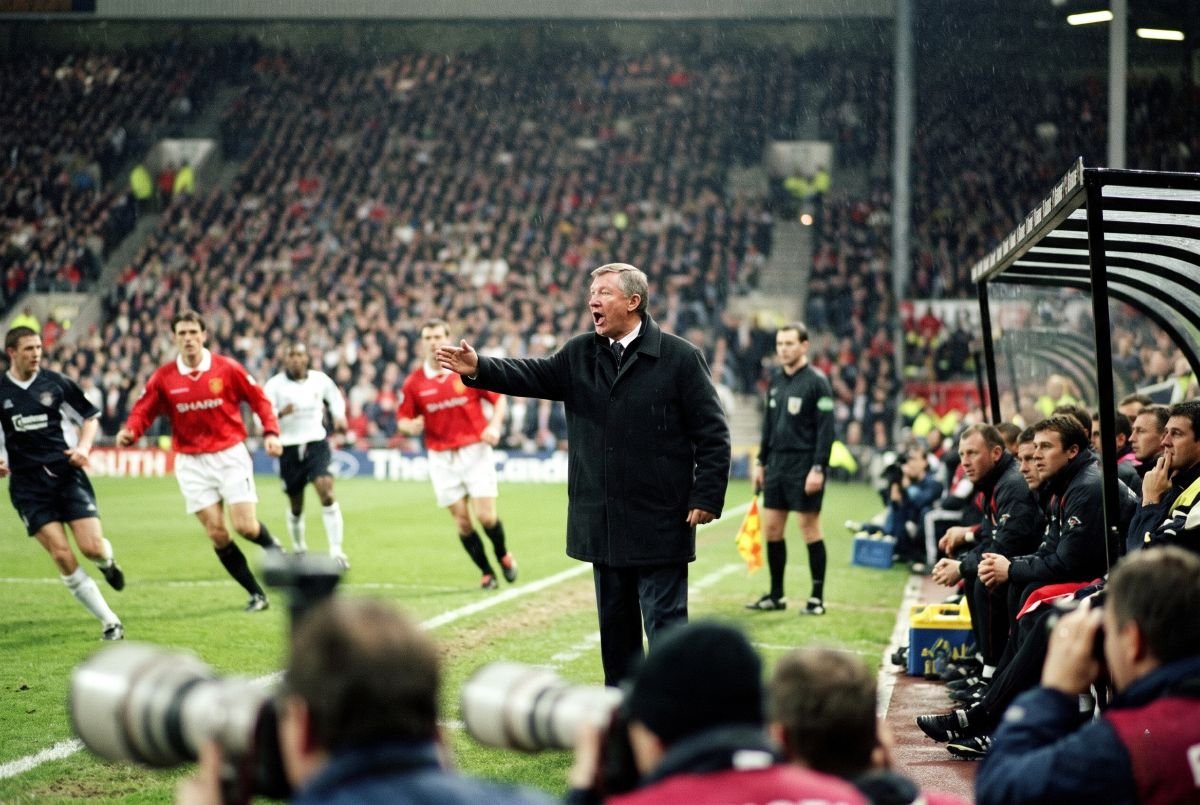
SIR ALEX FERGUSON’S MANCHESTER UNITED DYNASTY: HOW ONE MAN BUILT WINNING TEAMS ACROSS THREE GENERATIONS
Sir Alex Ferguson managed Manchester United from November 1986 until May 2013, spending more than 26 years at one of the biggest football clubs in the world. During that extraordinary period, he won 13 Premier League titles, two UEFA Champions League trophies, and 38 major and domestic honors according to Manchester United’s official trophy record.
His achievements established him as one of the most successful managers in football history. However, his greatest accomplishment was arguably not the number of trophies he collected. It was his ability to build, develop, and rebuild winning teams across different generations of players.
Many managers succeed with one outstanding group of footballers. Ferguson repeatedly created new teams capable of competing at the highest level. When experienced players became older, he introduced young talent, recruited new stars, and changed his tactical approach to meet the demands of modern football.
His greatest legacy was not simply winning with Manchester United. It was making the club competitive across an entire generation of football.
Building Manchester United After Arriving in 1986
When Ferguson arrived at Manchester United in November 1986, the club was struggling to return to the top of English football. United had not won the English league championship since 1967, and the team needed significant improvement both on and off the pitch.
Ferguson faced pressure during his early years. Results were inconsistent, and his position became particularly uncertain during the difficult 1989–90 season. However, winning the FA Cup in 1990 helped secure his future and provided an important foundation for the years ahead.
Rather than attempting to solve every problem by purchasing expensive players, Ferguson focused on building a stronger football structure. He improved recruitment, invested in youth development, and worked to establish higher standards of discipline and professionalism.
His first major league breakthrough came in the 1992–93 season, when Manchester United won the newly established Premier League. It was the club’s first English league championship in 26 years and the beginning of an extraordinary period of domestic dominance.
The following season, United won both the Premier League and the FA Cup, demonstrating that the previous title had not been an isolated success.
Ferguson had transformed a struggling team into a consistent contender. More importantly, he had established a culture in which winning was expected rather than treated as an occasional achievement.
The Class of ’92: His Greatest Youth Development Success
One of the most important parts of Ferguson’s legacy was his willingness to trust young footballers.
The Class of ’92 became the symbol of this philosophy. The group included David Beckham, Ryan Giggs, Paul Scholes, Nicky Butt, Gary Neville, and Phil Neville. These players developed through Manchester United’s youth system and gradually became important members of the first team.
Their emergence was not the result of one sudden decision in 1995. They had progressed through the academy and made their first-team breakthroughs at different times. Ferguson’s confidence in their potential allowed them to develop alongside more experienced professionals.
In the summer of 1995, Ferguson made several significant squad decisions. Experienced players including Mark Hughes, Paul Ince, and Andrei Kanchelskis left the club, while young players were given greater responsibility.
The decision attracted criticism. After Manchester United lost 3–1 to Aston Villa in the opening match of the 1995–96 Premier League season, television pundit Alan Hansen famously questioned whether a team built around young players could succeed, using the phrase “You can’t win anything with kids.”
Ferguson and his players provided a powerful response.
Manchester United recovered from that difficult beginning and went on to win the 1995–96 Premier League and FA Cup double. The young players became central figures in the club’s success over the following years.
The Class of ’92 represented more than a successful generation of footballers. They demonstrated how a manager’s belief in youth development could shape the identity of an entire club.
The 1999 Team: The Generation That Conquered Europe
If the Class of ’92 represented Ferguson’s commitment to youth development, the 1998–99 Manchester United team demonstrated the full potential of his management philosophy.
United had assembled a squad combining homegrown talent with experienced international players. David Beckham, Ryan Giggs, Paul Scholes, and Gary Neville played alongside established stars such as Roy Keane, Peter Schmeichel, Dwight Yorke, Andy Cole, and Jaap Stam.
The team was powerful, technically gifted, and capable of producing goals from different areas of the pitch.
The 1998–99 season became one of the greatest campaigns in English football history. Manchester United won the Premier League, FA Cup, and UEFA Champions League, completing an extraordinary treble.
The Champions League final against Bayern Munich became an unforgettable moment. United were trailing 1–0 as the match entered stoppage time, but substitutes Teddy Sheringham and Ole Gunnar Solskjær scored two late goals to secure a dramatic 2–1 victory.
That comeback illustrated several qualities associated with Ferguson’s teams: determination, belief, attacking ambition, and the ability to remain dangerous until the final whistle.
The 1999 treble established Ferguson’s place among the greatest managers in European football. It also demonstrated that his success was not limited to one group of young players. He had developed a team capable of competing with Europe’s strongest clubs.
Rebuilding Again: From Cristiano Ronaldo to the 2008 Champions
Football teams cannot remain at their peak forever. Players grow older, leave for new challenges, and eventually need to be replaced. Ferguson understood this reality and continually adjusted his squad.
During the early and middle years of the 2000s, Manchester United entered another important period of development. Cristiano Ronaldo joined the club in 2003, while Wayne Rooney arrived in 2004. Both became central figures in a new attacking generation.
Ronaldo developed from a talented young winger into one of the world’s most influential players. Rooney brought energy, creativity, and versatility to the attack. Alongside experienced players such as Ryan Giggs, Paul Scholes, and Rio Ferdinand, they helped United return to the top of English and European football.
The 2007–08 season became another defining moment. Manchester United won the Premier League and the Champions League, defeating Chelsea in the final in Moscow after a penalty shootout.
Ronaldo scored United’s goal during the 1–1 draw, while Edwin van der Sar saved Nicolas Anelka’s penalty to secure the European title.
The victory gave Ferguson his second Champions League trophy with Manchester United and confirmed that he had successfully built another championship-winning team.
When Ronaldo left for Real Madrid in 2009, Ferguson faced another challenge. Rather than attempting to recreate the same team, he continued adjusting the squad and introducing new players.
The signing of Robin van Persie in 2012 proved particularly important. His goals helped Manchester United win the 2012–13 Premier League title, Ferguson’s final league championship before retirement.
The Ferguson Philosophy: No Player Was Bigger Than the Club
One of Ferguson’s most recognizable qualities was his authority within the dressing room.
He expected players to respect the team’s standards, follow instructions, and maintain professional discipline. Individual talent was important, but it could not be allowed to damage the collective identity of Manchester United.
His approach sometimes resulted in difficult decisions involving established stars. Players could leave when Ferguson believed their time at the club had come to an end or when their presence no longer served the team’s interests.
This willingness to make difficult decisions helped him avoid becoming dependent on a single generation of footballers.
He also understood that successful teams required more than talented individuals. They needed a clear tactical identity, strong leadership, physical preparation, and a competitive mentality.
His management style was not always comfortable for players, and his decisions sometimes attracted criticism. Nevertheless, his long-term success demonstrated the importance of maintaining standards and making decisions with the future of the club in mind.
For Ferguson, the identity of Manchester United had to remain greater than the reputation of any individual player.
Ferguson’s Legacy in Numbers
| Category | Achievement | Detail |
|---|---|---|
| Years at Manchester United | 1986–2013 | More than 26 years |
| Premier League titles | 13 | A competition record for a manager |
| Champions League titles | 2 | 1999 and 2008 |
| Total trophies | 38 | Manchester United’s official club record |
| Matches managed | Approximately 1,500 | Across all competitions |
| Matches won | 895 | Across all competitions |
Source: Historical records compiled from Manchester United’s official history, Premier League records, and UEFA competition records.
Ferguson’s 13 Premier League championships are particularly remarkable. The first came in 1992–93, and the last arrived in 2012–13. Across those 21 Premier League seasons, Manchester United won the title 13 times, meaning Ferguson’s team finished first in approximately 62% of those campaigns.
That achievement illustrates not only dominance but also extraordinary consistency. His teams remained competitive despite changes in players, opponents, tactical trends, and the financial landscape of English football.
My Perspective
I am not a Manchester United supporter, but I have enormous respect for Sir Alex Ferguson because his career taught me an important lesson about life: success is not something you achieve once and then keep forever. You must have the courage to change, rebuild, and begin again when circumstances demand it.
For me, Ferguson was more than a football manager; he was an example of leadership, patience, and the determination to keep moving forward. His greatest achievement was proving that even after reaching the top, a person must continue working to remain there.
What do you think? Was Sir Alex Ferguson the greatest manager in football history, or do you believe another legendary coach deserves that recognition?