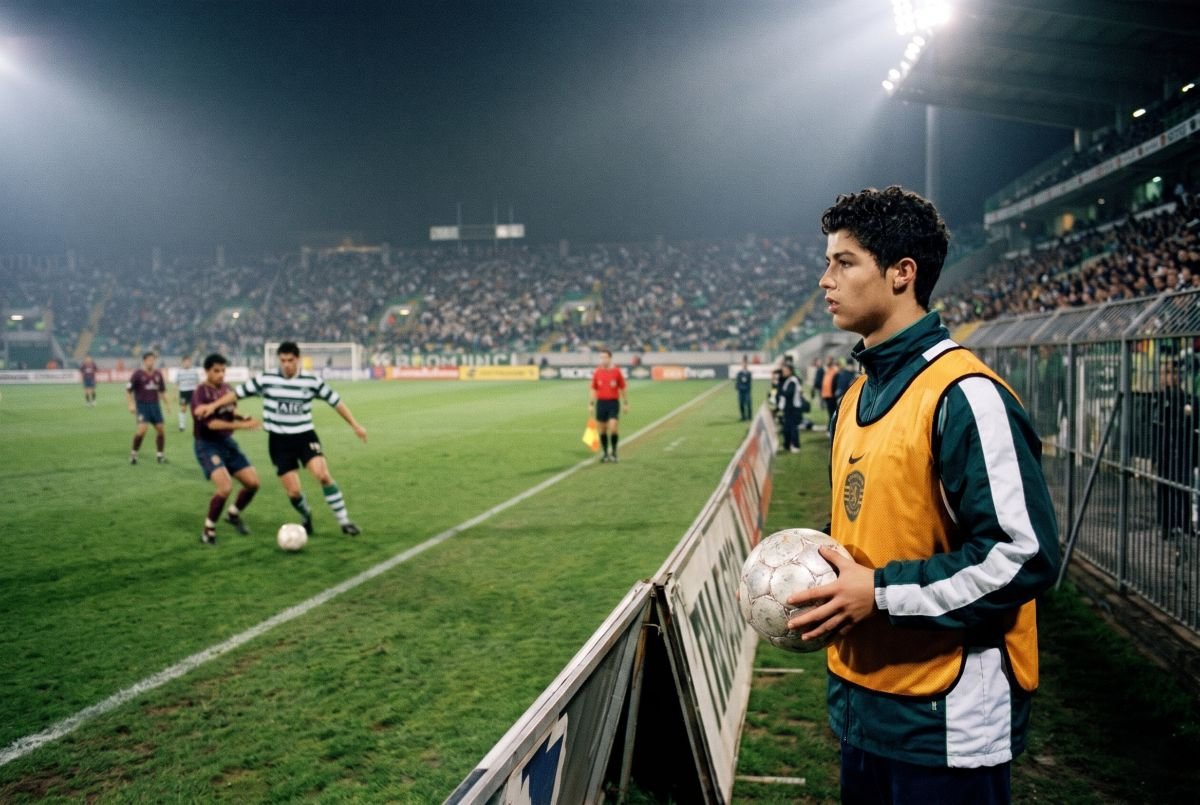
FROM A MODEST CHILDHOOD TO GLOBAL GREATNESS: THREE DISCIPLINES THAT HELPED CRISTIANO RONALDO BECOME A FOOTBALL LEGEND
Today, Cristiano Ronaldo is one of the most recognizable athletes in the world. His name is associated with extraordinary goals, record-breaking performances, and a career that has lasted across several generations of football. However, his journey began far from the glamour of the world’s biggest stadiums.
Born on February 5, 1985, in Funchal, Madeira, Portugal, Ronaldo grew up in a modest family. His childhood was not surrounded by wealth or luxury. His family faced financial difficulties, and football gradually became more than a passion for the young boy. It became his opportunity to build a different future.
Ronaldo did not reach the top overnight. His success came through years of practice, sacrifice, and an extraordinary desire to improve. While natural ability helped him stand out, his daily habits played an equally important role in shaping his career.
Here are three important disciplines that helped turn a talented boy from Madeira into one of football’s greatest players.
Habit One: He Always Looked for More Time to Train
When Ronaldo joined Sporting CP’s academy in Lisbon, he was still developing physically. Compared with some of his teammates, he appeared relatively slender, but his technical ability and determination were already attracting attention.
What separated him from many young players was his willingness to work beyond the scheduled training sessions. He understood that talent alone would not guarantee success, so he focused on improving his speed, strength, ball control, and finishing.
His development continued after joining Manchester United in 2003. Under Sir Alex Ferguson, Ronaldo gradually transformed from an exciting young winger into a more complete attacking player. He worked on his physical strength, improved his decision-making, and developed a much greater understanding of the game.
Training was not simply something he did because his manager demanded it. It was part of his personal ambition. He wanted to become better than he had been the previous day.
That attitude became particularly important as his career progressed. At Manchester United, Real Madrid, Juventus, and later clubs, Ronaldo continued adapting his game to remain effective against different opponents.
His evolution demonstrates an important lesson: great players do not stop developing simply because they have already reached the highest level.
Habit Two: He Treated His Body as an Essential Part of His Career
One of the most remarkable aspects of Ronaldo’s career has been his physical condition. Professional football places enormous demands on the body, especially for players who compete at the highest level for many consecutive seasons.
Ronaldo has consistently emphasized the importance of nutrition, recovery, physical conditioning, and professional preparation. His lifestyle is carefully organized around maintaining the strength and fitness required for elite competition.
His training has included strength exercises, sprint work, flexibility, and recovery sessions. He has also spoken publicly about the importance of eating well and avoiding habits that could negatively affect his performance.
There are many stories about Ronaldo’s strict lifestyle, but not every detail circulating online is reliable. For example, claims that he follows an exact schedule of eight hours of sleep plus five daily naps should not be treated as an established fact without a credible source.
What is clear is that physical preparation has been central to his career.
Ronaldo’s longevity is particularly impressive because his playing style has changed over time. In his younger years, he relied heavily on acceleration, dribbling, and explosive movement. As he matured, he became more focused on positioning, movement inside the penalty area, aerial ability, and efficient finishing.
He did not simply try to preserve the player he was at 20; he worked to become a different and more experienced player as he grew older.
Habit Three: He Hates Losing and Always Wants to Improve
Another defining characteristic of Ronaldo is his competitive mentality. He has repeatedly demonstrated that winning matters enormously to him, whether he is playing in a major final or competing during training.
His desire to win can sometimes appear intense, but it has also helped him maintain extremely high standards throughout his career.
For Ronaldo, every match is an opportunity to prove something. A missed chance can become motivation for the next training session. A disappointing performance can encourage him to work harder. Even after achieving major individual and team honours, he has continued setting new goals.
This mentality was visible during some of the most important moments of his career. At Real Madrid, he became the central figure in a team that won four Champions League titles between 2014 and 2018. With Portugal, he helped the national team win the 2016 European Championship and the 2019 UEFA Nations League.
Those achievements required more than individual talent. They demanded consistency, resilience, and the ability to perform when expectations were extremely high.
However, Ronaldo’s competitive mentality should not be confused with a belief that he can never lose. Even the greatest players experience setbacks. What matters is how they respond to them.
His career offers a powerful example of turning disappointment into motivation and maintaining ambition even after reaching extraordinary heights.
Cristiano Ronaldo’s Career: Numbers Behind the Legacy
Ronaldo’s achievements provide a clear picture of the scale of his career. He has collected individual awards, broken scoring records, and won major trophies in several countries.
| Category | Achievement |
|---|---|
|
Ballon d’Or |
5 awards |
|
UEFA Champions League |
5 titles |
|
European Championship |
1 title with Portugal, in 2016 |
|
UEFA Nations League |
1 title with Portugal, in 2019 |
| Domestic league titles |
England, Spain, and Italy |
| UEFA Champions League goals |
140, the competition’s historical record |
Source: Historical achievement records compiled from UEFA.com, FIFA.com, and the Portuguese Football Federation.
His success across England, Spain, and Italy demonstrates his ability to adapt to different football cultures and tactical environments. His five Ballon d’Or awards and five Champions League titles also place him among the most decorated players in the history of the sport.
But statistics cannot fully explain his influence. Millions of supporters have followed his journey because they see more than goals and trophies. They see a player who repeatedly challenged himself to reach higher standards.
My Perspective
Ronaldo’s story means a lot to me because I also understand what it feels like to come from a small place where people may not always believe that big dreams are possible. His journey from Madeira to the world’s greatest football stages reminds me that where you begin does not have to determine where you finish. I do not believe talent alone creates greatness, because without discipline, patience, and consistent effort, even extraordinary ability can remain unfulfilled.
What do you admire most about Cristiano Ronaldo? Is it his incredible physical condition, his competitive mentality, or the discipline that has helped him maintain such a long career? For me, his greatest lesson is simple: success is not built in one unforgettable moment, but through thousands of small decisions made when nobody is watching.