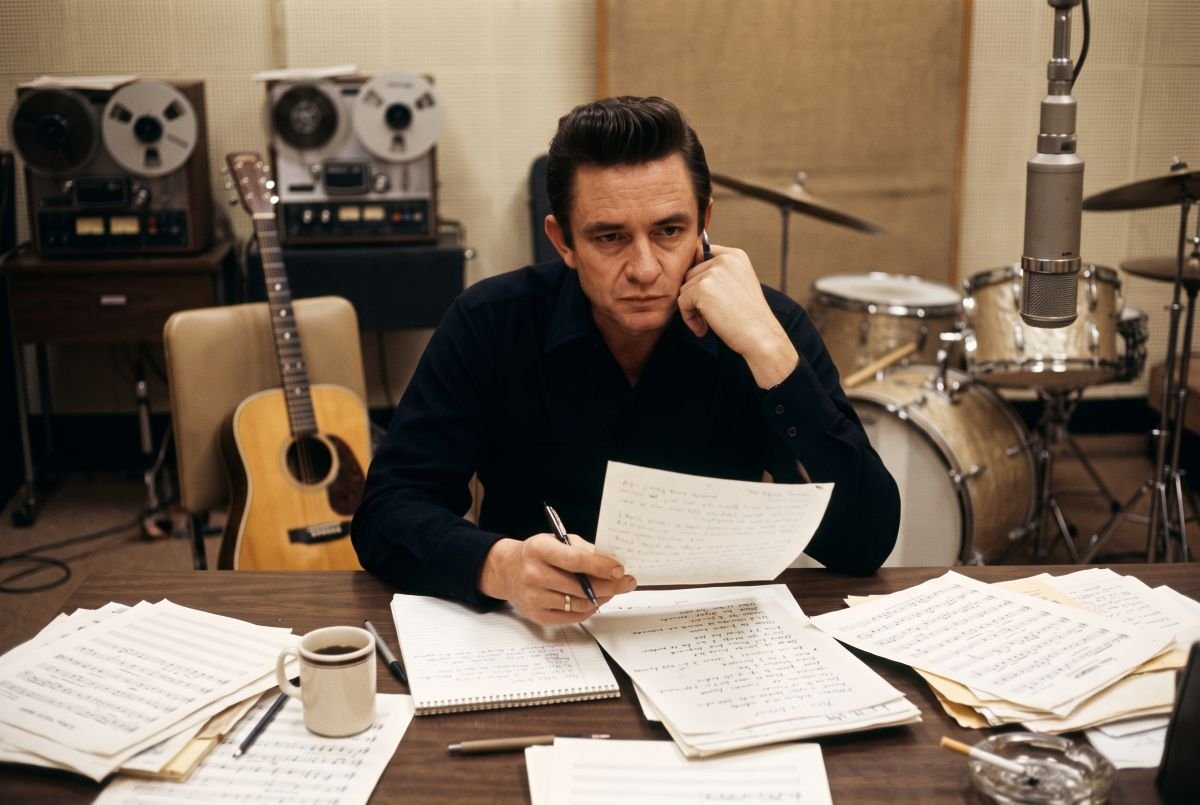
A POWERFUL AND EMOTIONAL REVELATION: JOHNNY CASH’S HEARTBREAK OVER YOUNG AMERICANS SENT TO THE VIETNAM WAR — THE PAIN, QUESTIONS, AND DEFIANCE THAT GAVE BIRTH TO “WHAT IS TRUTH”
Few moments in Johnny Cash’s career revealed his connection with ordinary Americans more clearly than the period surrounding the Vietnam War. At a time when the United States was deeply divided over the conflict, Cash found himself thinking about young men being sent thousands of miles from home, families waiting anxiously for news, and a generation struggling to understand a rapidly changing country.
Out of that turbulent atmosphere came one of his most thought-provoking songs: “What Is Truth.”
Released in 1970, the song was not simply another recording in Cash’s extensive catalog. It reflected the questions, tensions, and generational divisions that were becoming increasingly visible in American society. Cash approached the subject through the perspective of a father, a citizen, and an entertainer who had spent much of his life listening to ordinary people tell their stories.
The Vietnam era was an extraordinarily complicated period in American history. Young Americans were being drafted and sent overseas, while others participated in demonstrations against the war. Families, communities, and even generations often disagreed sharply about what the United States should do.
For many young people, the war became a defining experience.
For their parents and grandparents, the growing protests could sometimes seem confusing or alarming. The contrast between generations became particularly visible as young Americans questioned established ideas about authority, patriotism, and society.
Johnny Cash understood that tension.
He had spent years writing and performing songs about working people, prisoners, soldiers, families, and individuals living through difficult circumstances. He had a particular ability to take large national issues and express them through the experiences of ordinary people.
“What Is Truth” followed that tradition.
The song asks questions rather than providing an elaborate political argument. It contrasts the concerns of older generations with the voices of young people searching for answers. Cash’s approach was direct, conversational, and deeply rooted in the language of everyday Americans.
One of the song’s most memorable ideas is the importance of truth itself.
What does truth mean when generations see the same events differently? What happens when young people question the assumptions accepted by their elders? And how should a society respond when people disagree about war, authority, and the future?
These questions gave the song its lasting emotional power.
Cash was also personally familiar with military life. Before becoming a major music star, he served in the United States Air Force during the 1950s. His military experience shaped some of his understanding of soldiers and the responsibilities placed upon them.
That background helped him approach the subject of young Americans in uniform with a perspective that was different from someone who had never experienced military service.
At the same time, Cash’s music often demonstrated sympathy for people caught in difficult circumstances. His songs could acknowledge the experiences of soldiers without reducing them to political symbols.
That distinction is important when understanding “What Is Truth.”
The song did not simply present a debate about the Vietnam War. It explored a broader conflict between generations and ways of thinking.
America was changing rapidly. Young people were questioning traditions that had previously seemed unquestionable. Music, clothing, language, and social attitudes were changing alongside political debates. Television brought images of the war into American homes, making distant events feel immediate.
Against this backdrop, Cash stood on stage and gave voice to questions that many people were already asking.
His performance of “What Is Truth” at the White House in 1970 added another fascinating chapter to the song’s history. Cash performed for President Richard Nixon, and the appearance demonstrated the unusual position he occupied in American culture. He was a country music icon with enormous popularity among working-class and conservative audiences, yet he was also willing to address subjects that reflected the concerns of younger Americans.
That complexity was part of Johnny Cash’s appeal.
He did not fit neatly into one category.
He could sing gospel songs, prison ballads, love songs, working-class stories, and songs about national conflict. He could perform for prisoners and appear at the White House. His audience included people with very different political and social perspectives.
“What Is Truth” captured that unusual ability to bring difficult subjects into a musical setting.
The song also reflected Cash’s broader belief in human dignity. Rather than reducing the Vietnam generation to a simple stereotype, he recognized that young people were trying to understand a world that seemed increasingly complicated.
Some were serving overseas. Others were protesting at home. Families were trying to understand choices that could carry enormous consequences.
Behind every statistic was a person.
Behind every soldier was a family.
And behind every argument about the war were human beings trying to determine what they believed was right.
That human perspective is one reason “What Is Truth” continues to attract attention decades after it was written.
Johnny Cash’s legacy is often associated with his deep voice, black clothing, and unforgettable songs. But another important part of that legacy was his willingness to tell difficult stories without pretending that life was simple.
“What Is Truth” belongs to that tradition.
It emerged from a period when America was wrestling with profound questions about war, generations, authority, and the future. Cash transformed those tensions into a song that asked listeners to think rather than simply providing easy answers.
Perhaps that is the most enduring part of the story.
Johnny Cash understood that music could do more than entertain. It could remember the people behind history, give ordinary voices a place in the conversation, and preserve the emotions of an era long after the headlines had disappeared.
The Vietnam War eventually ended, and the generation that lived through those turbulent years grew older. But the questions raised during that period did not disappear entirely.
And somewhere within Johnny Cash’s powerful voice remains the central question that gave the song its name:
What is truth?
It was a question born from a deeply divided era, but its significance extended far beyond one war or one generation. For Johnny Cash, it became a way to reflect on the human cost of uncertainty—and on the importance of listening when an entire generation begins asking difficult questions.