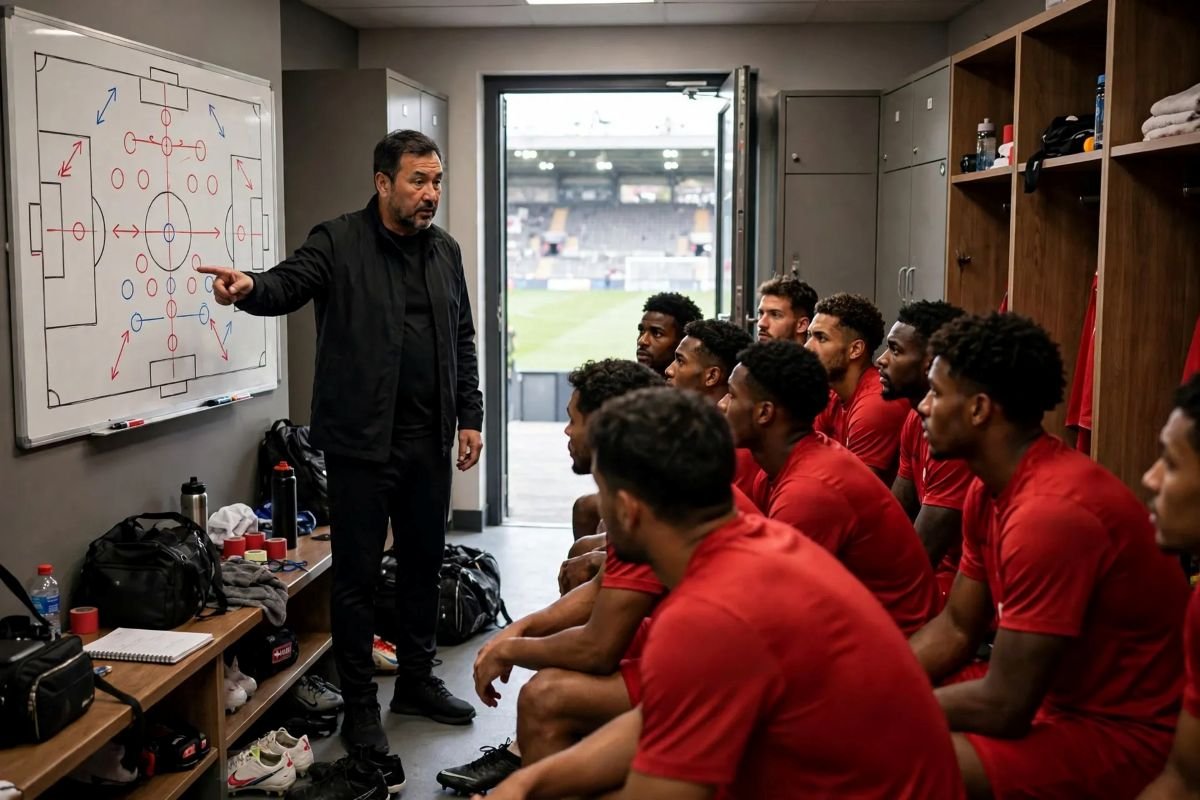
THE FIRST SIX SECONDS AFTER LOSING THE BALL: HOW GEGENPRESSING CHANGED MODERN FOOTBALL
There was a time when losing possession meant one thing: get back into position, reorganize the defensive line, and prepare to stop the opposition’s attack. That principle still exists in football, but modern coaches have added another possibility — attack immediately after losing the ball.
Instead of retreating, nearby players move forward, close down the opponent, block passing options, and attempt to recover possession before the opposing team can organize its attack.
This approach is widely associated with Gegenpressing, a German term often translated as counter-pressing. Jürgen Klopp became one of its most influential modern advocates, particularly during his successful periods at Borussia Dortmund and Liverpool.
The idea is simple but demanding: the moment your team loses the ball may also be its best opportunity to win it back.
But why do coaches place so much importance on those first six seconds? And how did this approach change the responsibilities of modern footballers?
Jürgen Klopp Helped Make Counter-Pressing Famous
When Klopp arrived at Borussia Dortmund in 2008, he began developing a team built around intensity, collective movement, and aggressive pressure on opponents.
His football became associated with Gegenpressing: rather than immediately retreating after losing possession, players attempt to recover the ball as quickly as possible.
The reasoning is tactical.
When a team wins possession, its players often begin moving into attacking positions. Some players spread wide, others run forward, and the team starts preparing its next pass. During this transition, the defensive structure may temporarily become less organized.
That creates an opportunity.
If the opposing team loses the ball and immediately faces pressure from several directions, the player in possession may have limited time to look up, control the ball, and find a teammate. A rushed pass, a poor first touch, or a blocked passing lane can give possession back to the original team.
This is why the first few seconds are so important.
The commonly discussed six-second principle is a useful coaching guideline, not an official football rule or a universal deadline. Players should press immediately when the situation allows it. If they cannot recover possession or disrupt the opponent’s attack, they must recognize the moment to reorganize defensively.
Klopp did not invent pressing after losing possession, but his teams helped bring this aggressive approach to worldwide attention.
Why the First Six Seconds Can Be So Dangerous
Imagine Liverpool attacking Manchester City.
Liverpool lose the ball in the middle of the pitch. Instead of running backward immediately, the nearest players close down the opponent. One presses the ball carrier, another blocks the forward passing option, and a third moves into a position where a potential pass can be intercepted.
The objective is not simply to run toward the ball. It is to make the opponent’s next decision difficult.
Three important things happen during this process:
- The ball carrier loses time: Immediate pressure reduces the opportunity to turn, look forward, and select a comfortable pass.
- Passing options become limited: Teammates position themselves to block dangerous routes through the middle or toward the attacking players.
- The opponent’s transition is disrupted: The team that has just won possession may be forced to abandon its planned attack and defend again.
However, counter-pressing does not mean every player should chase the ball without thinking. If the opponent escapes the initial pressure, the pressing team can become vulnerable to a quick counterattack.
Successful teams therefore need coordination. Every player must understand when to press, which passing lane to block, and when to retreat.
The objective is not to run more than the opponent. It is to make the opponent run out of good options.
Modern Football Did Not Abandon Old Defensive Principles
It would be misleading to say that football in the 1990s was simply slow or that players always returned to fixed positions after losing possession.
The 4-4-2 formation was widely used during that period, but teams still pressed, counterattacked, and defended collectively. Different managers had different approaches, and tactical innovation did not begin with Klopp.
What has changed is the level of coordination, the intensity of pressing, and the importance placed on controlling transitions.
In modern football, teams such as Manchester City, Arsenal, Liverpool, and Real Madrid use different approaches depending on their opponents and the match situation. Some press aggressively near the opposition’s penalty area. Others defend in a compact block and wait for a suitable moment to apply pressure.
Even teams that prefer possession football must prepare for the possibility of losing the ball.
This is why modern tactical systems often include carefully positioned players behind the attack. These players provide defensive protection, help control space, and prevent opponents from exploiting the areas left open by advancing teammates.
The formation shown before kick-off does not tell the whole story. A team listed as 4-3-3 might defend in a 4-4-2 shape, press in a 4-2-4 structure, and build attacks using a 3-2-5 formation.
Modern football is increasingly about controlling space and transitions, not simply choosing a formation.
The Six-Second Principle Changed What Coaches Expect From Players
Counter-pressing has also changed the responsibilities of individual positions.
A modern striker cannot always wait near the opposition’s penalty area. The striker may be expected to initiate the press, direct the opponent toward a particular side, and prevent an easy pass to the central defenders.
Midfielders must recognize danger immediately after possession is lost. They need the stamina to cover space, but tactical awareness is equally important. A midfielder who runs toward the ball without considering the passing lanes may actually make the team’s defensive situation worse.
Defenders also need more than traditional tackling ability. They must understand positioning, anticipate passes, and sometimes defend large spaces behind the midfield line.
Goalkeepers have become important participants in this tactical evolution. Many modern teams use goalkeepers who are comfortable receiving passes, playing under pressure, and covering space behind a high defensive line.
The result is a more demanding version of football in which players are expected to contribute in several phases of the game.
Does Modern Football Really Require More Running?
Physical demands have increased in several areas of elite football, particularly high-intensity running, repeated accelerations, and sprinting. However, comparing modern players directly with footballers from the 1970s is difficult because tracking technology and measurement methods were not equivalent.
Modern performance analysis can measure far more than total distance. Coaches examine high-speed running, sprint frequency, acceleration, deceleration, and the distances covered during different phases of a match.
A player covering 11 kilometres does not necessarily perform better than someone covering 10 kilometres. The timing and purpose of those movements matter.
A midfielder who makes a perfectly timed run to close a passing lane may contribute more to the pressing system than a teammate who covers a greater distance without tactical purpose.
In Gegenpressing, intelligence and physical intensity must work together.
Understanding the Gegenpressing Approach
| Tactical element | Main objective | Importance |
|---|---|---|
|
Immediate pressure |
Challenge the opponent after losing possession | Disrupt the first attacking action |
|
Passing-lane control |
Limit available passing options | Prevent an easy escape |
|
Collective movement |
Ensure nearby players press together |
Avoid leaving isolated defenders |
| Recovery of possession | Win the ball back quickly |
Create another attacking opportunity |
| Defensive regrouping | Restore the team’s shape when pressing fails |
Prevent dangerous counterattacks |
Source: Tactical principles summarized from established coaching concepts and UEFA technical analysis.
My Perspective
When I first heard about the six-second principle, I thought it was simply about running harder than the opposition. Now I understand that its real value lies in thinking quickly, recognizing opportunities, and acting together before the opponent can organize. For me, Gegenpressing represents a lesson beyond football: when something goes wrong, the ability to respond intelligently and decisively can be just as important as the ability to succeed in the first place.
Do you believe Gegenpressing is the most important tactical development in modern football, or will another philosophy eventually replace it?