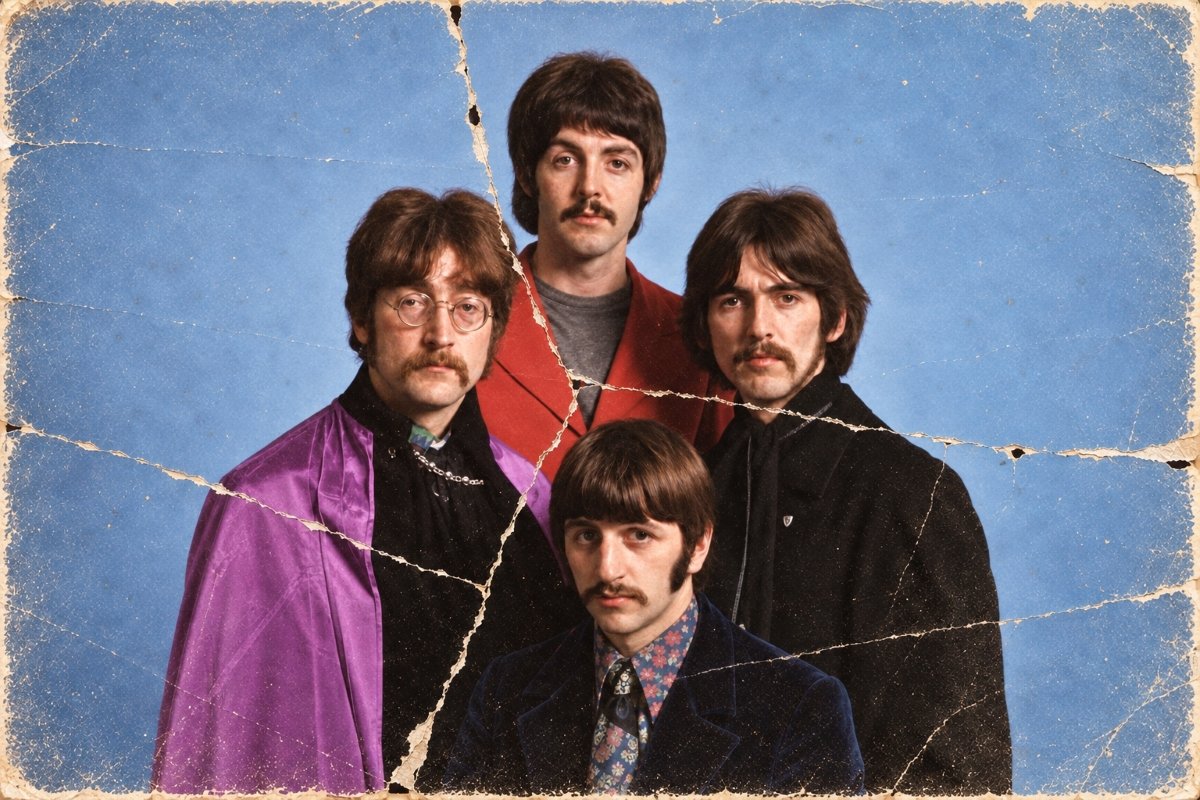
56 YEARS AFTER THE BEATLES’ BREAKUP: THE HEARTBREAK STILL ECHOES—AND THEIR FINAL LIVE SONG HITS DIFFERENTLY NOW
London, England, 1970. The world was coming to terms with something that, only a few years earlier, would have seemed almost impossible: The Beatles were going their separate ways. John Lennon, Paul McCartney, George Harrison, and Ringo Starr had helped define a generation. Now, the partnership behind so much extraordinary music was coming to an end.
For listeners who had first heard them on a car radio, watched their American television debut with their families, or saved pocket money to buy their records, the news felt personal. Their songs had accompanied first dances, summer afternoons, and the uncertain journey into adulthood. Those four familiar faces seemed inseparable from the memories their music had helped create.
Fifty-six years later, the question still lingers: how did a band capable of such remarkable harmony become so divided?
The answer lies in a history of loss, changing ambitions, and disagreements that became increasingly difficult to resolve. There was no single argument that explained everything, no one moment that could account for the entire collapse.
One of the most significant blows came in August 1967, when Brian Epstein, the band’s manager, died at just 32. Epstein had helped guide The Beatles from their early promise toward international fame. His death left them grieving while also confronting a practical problem: the person who had overseen their business affairs was suddenly gone. Lennon later identified that loss as a moment when he recognized serious trouble ahead.
For all their confidence as musicians, they now faced decisions that musical talent alone could not settle. Questions about leadership, responsibility, and the future of their shared enterprise demanded answers.
Success had given them extraordinary opportunities. It had also made their lives more complicated. Every new project involved expectations, financial commitments, and competing opinions. The challenge was no longer simply to make another great record. It was to agree on how they should continue working together.
Creative differences became harder to contain. Lennon and McCartney’s partnership had produced an exceptional body of work, but their interests were moving in different directions. Harrison, meanwhile, had developed into a formidable songwriter whose contributions deserved increasing attention. Starr also had ambitions beyond the familiar boundaries of the group.
These changes were understandable. The four musicians had grown older, acquired new responsibilities, and developed stronger individual identities. A working arrangement that had suited them earlier could no longer accommodate every idea or expectation.
For anyone who has spent years in a close partnership, that difficulty may sound familiar. Shared experience creates a powerful bond, but it does not guarantee that everyone will want the same future.
Business disagreements added another strain. The dispute over management became particularly divisive: Lennon, Harrison, and Starr supported Allen Klein, while McCartney favored the Eastmans. Choosing who would represent their interests became a disagreement about trust and control.
Once those questions entered the relationship, resolving artistic differences became more difficult. An argument about a project could carry the weight of several other unresolved disputes. By the time the breakup became public in 1970, the tensions had been building for years.
Yet much of the public discussion settled on one familiar name: Yoko Ono.
Blaming Ono alone offers a convenient explanation for a painful ending, but it leaves too much out. Lennon’s relationship with her became part of his changing priorities, and her presence attracted intense attention. The band’s difficulties, however, also involved financial disagreements, individual ambitions, and strains between the musicians themselves.
Understanding the breakup requires looking at those pressures together. Reducing the story to one person obscures the decisions and differences within the group.
Perhaps the most affecting part of their final chapter is that the musical connection had not disappeared. Even as their working relationship deteriorated, they could still create extraordinary records together.
Abbey Road, released in September 1969, offers compelling evidence of that ability. It was the final album they recorded together as a band, although Let It Be, drawn largely from earlier sessions, reached listeners afterward in May 1970. Their ending unfolded gradually, while music of enduring beauty was still being made.
That is why the breakup remains difficult to dismiss as an ordinary professional separation. Listen to those recordings, and you can still hear the imagination, discipline, and understanding they brought to one another’s work.
An unavoidable question follows: if they could still make music like that, could they have found a way to continue?
There is no certain answer. A different business decision, more time apart, or another conversation might have changed something. But hindsight cannot tell us whether it would have been enough.
For longtime listeners, the sadness comes partly from knowing that their shared story had possibilities it would never explore. Their separate careers would bring further achievements, but the particular combination of John, Paul, George, and Ringo belonged to a chapter that had closed.
And yet, when looking for an image to remember them by, there is another place to turn: a London rooftop, a cold January afternoon, and one final song.
On January 30, 1969, The Beatles performed on the roof of their Apple Corps headquarters at 3 Savile Row, joined by keyboardist Billy Preston. People stopped in the streets below as the music carried through the winter air. The setting was unusual, almost casual, for a band whose appearances had once drawn enormous crowds.
The performance ended with “Get Back”—the last song all four Beatles played together in public.
It had not been announced as a farewell concert. They would continue recording afterward, and the public breakup was still more than a year away. That distinction makes the moment especially touching: its place in history became clear only later.
Watching it now, we can still see the energy in their playing and the ease of certain exchanges. The familiar musical understanding was there, even amid the difficulties surrounding them. At the close, Lennon jokingly expressed his hope that they had passed the audition.
For a group approaching the end of its performing life together, it was a wonderfully lighthearted finish.
“Get Back” was not written as their goodbye, but it became the song that closed their final public performance. Its lively rhythm leaves us with something more generous than an image of four musicians drifting apart. It lets us hear them working together one last time before an audience, bringing the song to life with the instinct and character that had made them unmistakable.
Fifty-six years after the breakup, that is a moment worth returning to. Before the music stops, John, Paul, George, and Ringo are still there together—and for those few minutes, we can listen.